A safety buffer is almost always set for a moment. A volatile patch in demand, a supply scare, a new line launching with no history to lean on. In that moment a generous buffer is the sensible call: it is what lets you sleep at night. So the number goes in high, and it does exactly what it was meant to.
Then the moment passes. Demand steadies. The supplier settles down. The new line finds its rhythm. But the buffer does not come down with it, because lowering it is a decision someone has to actively make, and nobody is measured on making it. So it stays, sized for a level of uncertainty that no longer exists.
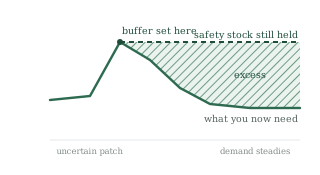
On a single SKU this is a rounding error, not worth a second thought. The problem is that it is not a single SKU. The same habit runs across every item and every location: buffers set once, in different moments, for reasons that have long since passed, none of them revisited. Add them up and you are financing a warehouse of just in case.
What makes this hard to see is that nothing looks wrong. No one over-ordered. No forecast blew up. The cash was tied up by a number that was correct the day it was set and was simply never brought back to reality. It is the quiet cost of a one-time change nobody comes back to.
And to be clear, the answer is not to strip the buffers out. Some of that cover is doing real work and protecting the sales that matter. The point is narrower: a buffer is a decision with a shelf life, and most of them are years past it. The only way to know which is to measure what each one actually needs to be now, against current demand, rather than the moment it was born in.