Part of it is safety stock, the buffer against variability in demand and supply. Lead time does affect this part.
But most of what sits on the shelf is cycle stock: the quantity ordered each time, drawn down until the next order arrives. Cycle stock is set by how often you order, not how long delivery takes.
Order once every seven days and you hold roughly seven days of cycle stock on average, whether the lead time is five days or thirty. Order once a month and you carry about a month, even if the supplier delivers overnight. Lead time shifts when the order is placed. Order frequency sets how much is carried between orders.
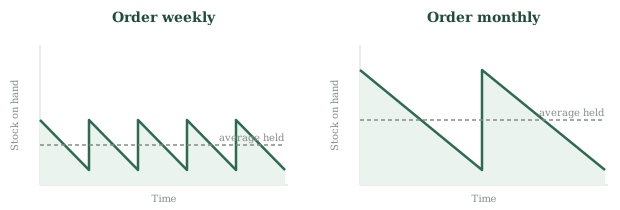
This matters because frequency is usually the more movable lever. Shortening a lead time is hard. Ordering more often, in smaller quantities, is often a scheduling decision, and it pulls cycle stock down directly, as long as ordering and freight costs still work at the smaller quantity.
So when a category looks heavy on cover, the first question is less “how long is the lead time” and more “how often do we order, and could we order more often.”