Ask why the cover is 60 days and you will get a good answer. Lead times are what they are. Service risk is real. There was a bad quarter a few years ago that everyone still remembers, and the number went up then for a reason. None of this is evasion. The answer is sincere, it is usually well informed, and it is delivered by people who know the operation far better than whoever is asking.
The difficulty is not the answer. It is who is giving it. The two functions closest to the number both have a quiet preference for it being high, and they arrive at that preference honestly. Commercial does not want to be the reason a sale was missed. Supply does not want to be the one explaining a stockout in a Monday review. Cover protects both of them from the thing they are actually measured on. Neither of them carries the cost of the capital sitting behind it.
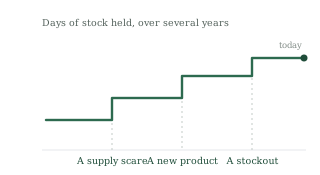
The person who does carry that cost is usually not in the room when the number is set. Finance sees the consequence in the working capital line, quarters later, aggregated across thousands of items, by which point it is a total rather than a decision. What it never sees is the individual judgement that produced it, item by item, which is where the number was actually made.
That creates a one-way ratchet. Raising cover is a decision somebody makes deliberately, in a moment when the risk feels vivid. Lowering it has to be proposed by somebody, in a quarter when nothing in particular is happening, and it earns the proposer nothing but risk. So the number gets justified whenever it is challenged, and it drifts upward over years, and every step of the drift was defensible on the day it was taken.
Worth being clear about what this is not. It is not a claim that the cover is wrong, or that the people defending it are protecting themselves. Much of that stock is doing exactly what it should, and cutting it indiscriminately would cost more than it released. It is also not a governance failure in any meaningful sense. The number was never neglected. It was simply always answered from the inside.
Which is the whole point. A number defended by interested parties, however honestly, is not the same as a number that has been checked. The only way to know which part of your cover is earning its place is to work out, item by item, what each one would need to be against your own current demand and your own lead times, and to compare that with what you are holding. Not against an industry figure, and not against the recollection of a bad quarter. Against your own data, by somebody with no stake in the answer.