A benchmark is an average of many businesses, each with different lead times, different demand patterns, and different service promises. Sitting inside that average tells you that you are normal. It does not tell you that you are right.
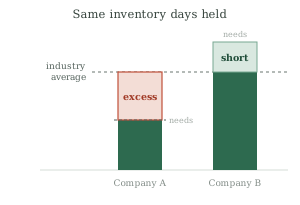
Your correct stock level is set by the specifics of your own business: how variable your demand is, how your suppliers actually behave, how often you order, what service level you have promised, your product mix. It is not a single number you can copy from an average.
Two companies can both sit exactly on the industry average and be in completely different positions. One is carrying weeks of cash it does not need. The other is holding less than it needs and occasionally running short.
So the benchmark cuts both ways. Beating the norm does not mean there is no excess to release. Matching the norm does not mean there is no room. The average is other people's answer to a different question.
The useful question is not how do we compare? It is what does our own business say we should hold?